Decision-First Data Strategy: Why Better Decisions Start Before the Dashboard
A decision-first data strategy starts with the decision a business needs to improve, not with a data lake, a dashboard, or an AI tool.
It sounds obvious. Almost nobody works this way.
Most data programs begin with collection: what can we gather, where should it live, which platform connects it. Reasonable questions, usually owned by IT. But they skip the one that determines whether the investment pays off: which repeated decision will this data support?
Build the infrastructure without a decision model on top, and you have built expensive storage. This argument sat at the centre of our recent conversation on the Digitale Optimisten podcast.
Data-rich, decision-poor
No enterprise is short of data. The transactional core is usually well governed: the ERP runs, the warehouse fills, the BI platform renders its charts.
Yet when a real planning decision arrives- a pricing change, a monthly flash closing- the work leaves those systems entirely. Data gets exported to Excel. The recommendation travels by email, attached as version three, final, final. By the time the organisation acts, conditions have moved.
The problem is not access to information. It is the missing path from information to action.
Traditional programs collect, organise, visualise, discuss, then decide manually. A decision-first approach reverses the logic: define the decision, model how it works, connect the data it needs, execute, and measure the outcome.
That reversal is the foundation of a decision-first data strategy.
What is a decision-first data strategy?
A decision-first data strategy organises data, analytics, workflows, and AI around a specific business decision and the outcome it should improve.
Instead of asking what data the company has, it asks questions a business owner can answer. Which decision are we improving, and who owns it? When does a human approve? What action follows, and how will we know it worked?
Answer those, and the rest falls into place: the data has a job, the analytics support a choice, and the workflow makes ownership and next steps explicit.
Data stays essential. It stops being the objective and becomes a means to an end.
Why dashboards are not enough
Dashboards are good at one thing: showing what happened. That has real value, and a decision-first data strategy does not eliminate dashboards.
But dashboards look backwards, and a decision looks forward.
Say the dashboard shows margin eroding in one sales channel. It will not tell you why, what a discount cap would change, which option protects volume and profitability, who is authorised to act, or whether last quarter’s fix worked.
That space between seeing and acting is where decision latency grows. People read the same chart differently, meetings multiply, and the final call owes more to hierarchy than to shared process.
Keep the dashboards. Just demote them, from destination to input.
Build shared meaning, not just connected data
Connecting systems is the easy half of the problem. The hard half is agreeing on what the data means.
A spreadsheet formula points to cells A1 and B2 without ever understanding what they contain. A semantic model refers instead to revenue, stock, or margin, wherever the values physically live. End-of-month stock is always previous month stock plus production minus sales, never “the cell above.”
Revenue can be gross, net, or like-for-like after an acquisition. Two teams can use one word for two calculations and only discover it in the steering meeting.
Without shared definitions, self-service analytics produces competing answers. AI raises the stakes: ask a model about revenue when revenue has four meanings, and it will confidently pick one for you. Is it the one you wanted?
A decision-ready semantic layer fixes this: common definitions, relationships, and logic that give people, and AI, a reliable context. Not one source of data. One shared understanding of what it means.
Turn decisions into explicit workflows
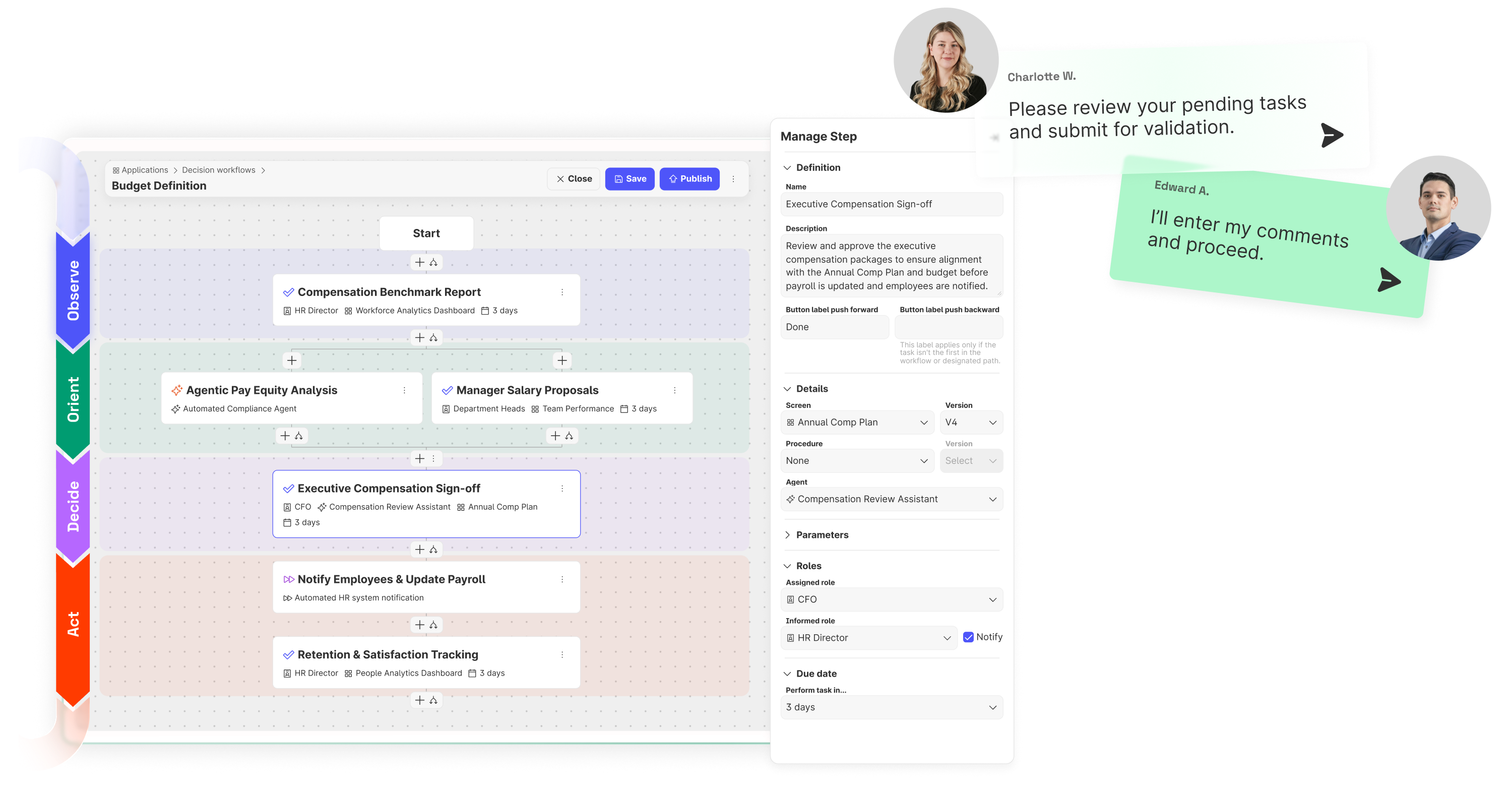
This is where a decision-first data strategy becomes operational. With the decision defined and the meaning agreed, model how it moves.
Back to the margin example. As a workflow, it has a trigger (channel margin drops below a threshold), an owner, the KPIs and constraints that apply, the scenarios worth comparing, an approval path, the systems that execute the new policy, and the outcome to measure afterwards.
The decision stops disappearing into meetings, inboxes, and spreadsheets. Its logic, ownership, and status stay visible, and the next occurrence reuses the workflow instead of rebuilding it.
You are building a digital twin of how the company decides, not just a copy of its data.
AI is the enabler, not the foundation
A manager should not need a database schema to ask what changed yesterday, why a KPI deteriorated, or what happens if prices move two per cent.
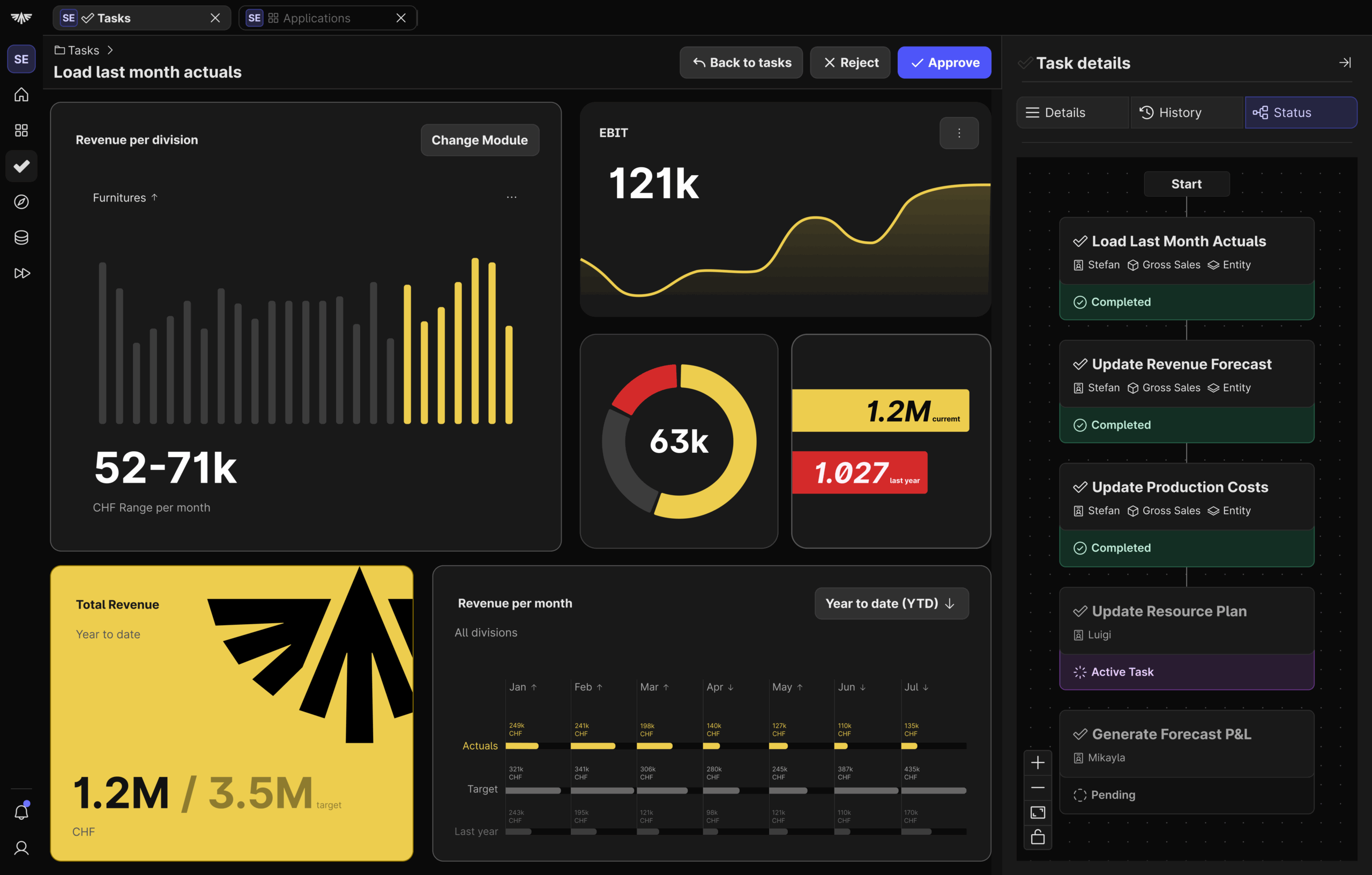
Natural language makes that possible, but a conversational interface is only as reliable as the context beneath it. On a shared semantic model and explicit workflows, AI can do three useful things. Ask: explore data and decision models conversationally, without queries or the analytics backlog. Explain: trace a KPI back through its drivers and source data, like an analyst on call who knows every relationship in the model. Act: within a governed workflow, monitor events, run scenarios, recommend the next step, and execute authorised actions.
One caution from experience: AI makes data easier to consume and bad data harder to manage, because the model answers either way fluently. AI is the easiest way into the organisation’s decision capability, not a substitute for building one.
Humans set the boundaries
Not every decision should be automated, and a decision-first data strategy forces that choice into the open.
For each workflow, the business decides whether AI should support the decision with context, augment it with explanations and recommendations, or automate defined actions inside approved rules.
The reason to keep a human in the loop is simple: an agent can know everything and still carry no accountability for the decision. You choose where AI supports, where it accelerates, and where it acts.
From expensive storage to measurable outcomes
Enterprises will keep investing in platforms, analytics, and AI. The question is whether those investments change how the organisation decides and acts.
A decision-first data strategy connects the spending to a purpose. It gives data a job, analytics a destination, and AI a governed environment, treating Decision Intelligence as a discipline rather than another dashboard feature.
The goal was never to be data-driven for its own sake. The goal is to make better decisions, then make them easier to execute, measure, and improve.
That is where data stops being expensive storage and starts creating business value.
Explore our Decision Intelligence platform to see the approach in practice.